
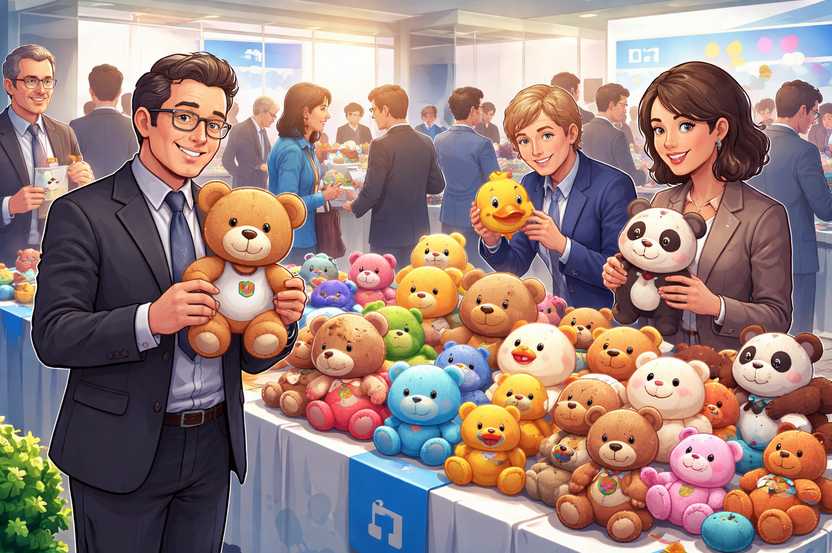
Business environments tend to prioritize efficiency, structure, and measurable outcomes. Comfort objects appear to exist outside that world. Yet when placed thoughtfully within professional settings—trade shows, education fairs, fundraising events—they create a moment of human connection. That brief moment can have surprising value.
People rarely remember the twentieth pen they collected at a conference. They do remember the oddly charming plush mascot that now lives on their office shelf.
Touch Creates Memory
Human memory is strongly linked to physical sensation. Psychologists sometimes refer to this as tactile encoding: the brain processes information differently when touch is involved. Soft textures, weight, and shape help anchor experiences in memory.A conference visitor who picks up a soft mascot engages multiple senses simultaneously. The brain registers the texture, the visual identity, and the context of the interaction. That combination makes the encounter easier to recall later.
By contrast, printed materials rarely activate more than sight.
This matters for organizations hoping to remain memorable after a crowded event. Dozens of booths may compete for attention, but only a handful create experiences that people carry away with them—sometimes literally.
Comfort objects also slow people down. Visitors pause to examine them, ask questions, and interact with staff. That pause is valuable. Meaningful conversations rarely happen when someone is rushing past a table with a tote bag already filled with flyers.
Serious Settings Benefit From a Softer Touch
Professional environments can be formal to the point of intimidation. Education fairs, recruitment events, and charity conferences often involve serious decisions and important conversations.A small comfort object can subtly change the tone of that interaction.
Someone approaching a booth that features a friendly mascot may feel less hesitant to begin a conversation. The object becomes a neutral icebreaker. No one needs to craft a perfect opening line when they can simply say, “That’s an interesting mascot.”
Even senior executives—people who spend their days negotiating contracts and studying quarterly reports—occasionally pick up the plush item and grin like someone who just rediscovered their childhood teddy bear. The moment lasts a few seconds, but it shifts the atmosphere from transactional to human.
Not every professional setting benefits from novelty, but environments involving networking and outreach often do.
And yes, many attendees who claim they are “just holding it for a moment” eventually slip the mascot into their tote bag.
Why People Keep Certain Giveaways
Most event merchandise has a short lifespan. Pens run out of ink. Flyers disappear into recycling bins before attendees even leave the venue.Comfort objects behave differently.
People keep them because they serve a purpose beyond promotion. They become desk companions, conversation starters, or small reminders of a meaningful event. A graduate may keep a mascot from a university fair for years. A charity supporter may display one as a quiet symbol of a cause they care about.
Several characteristics tend to increase longevity:
- A friendly design that sparks an emotional reaction
- Soft or tactile materials that invite interaction
- A clear connection to the organization’s identity
- A size small enough to sit comfortably on a desk or shelf
Office desks across the world quietly prove this point. Between monitors and coffee mugs sits an odd assortment of mascots, keepsakes, and small toys collected over years of conferences and events.
They stay there because throwing them away feels oddly wrong.
Designing Merchandise That Survives the Return Trip
Event organisers often imagine their merchandise living long, productive lives on desks across the business world. Reality can be less flattering. Many items barely survive the journey back to the hotel room.Comfort objects avoid that fate when they are designed with people—not just logos—in mind.
The most successful examples share a few quiet principles. They feel pleasant to hold, they look friendly rather than overly corporate, and they represent something recognisable. When an object resembles a mascot, animal, or character connected to the organisation’s identity, people understand it immediately. No explanation required.
Practical considerations also matter. A mascot that fits easily into a bag is far more likely to travel home. If the object doubles as a stress reliever during long meetings, even better. A soft item squeezed during a quarterly budget discussion may be the only cheerful participant in the room.
Serious brands sometimes worry that such objects undermine their credibility. Experience usually proves the opposite. When done thoughtfully, comfort items signal approachability. They suggest the organisation understands people, not just markets.
There is also a quiet strategic benefit. A mascot placed on a desk may remain visible for months or even years. Each time someone glances at it, the memory of the event resurfaces. Marketing departments spend considerable effort trying to achieve exactly that kind of sustained recall.
The difference is that the plush mascot accomplishes it without sending a single follow-up email.
When Soft Objects Strengthen Serious Messages
Charities and educational organisations have discovered another advantage. Comfort objects can carry emotional meaning.A mascot linked to a campaign, school program, or community initiative becomes more than a promotional item. It becomes a small symbol of participation. Supporters keep it not because it was free, but because it represents involvement in something important.
At fundraising events, these items often appear in unexpected places months later—on office shelves, pinned to backpacks, or sitting quietly beside a laptop during a video call. Their presence signals affiliation. Someone cared enough about a cause to keep the reminder.
There is also a subtle social effect. When colleagues notice the mascot and ask about it, a conversation begins. The story of the event or organisation travels further, carried by curiosity rather than advertising.
Meanwhile, the object itself simply sits there, looking innocent.
It would be inaccurate to claim plush mascots solve every marketing challenge. They will not replace thoughtful messaging or meaningful engagement. However, they can support those efforts in a way that traditional materials rarely manage.
A soft object rarely interrupts anyone. It waits patiently on a desk, gathering small moments of attention.
Fuzzy Logic That Works
Professional environments sometimes underestimate the value of small emotional signals. Conferences focus on presentations, data, and strategy. All important elements. Yet human memory tends to hold onto moments that feel personal.Comfort objects create those moments almost accidentally. Someone pauses, smiles, squeezes the mascot, and begins a conversation. Later, that same object quietly accompanies them back to the office, where it becomes part of the background of daily work.
Weeks pass. Meetings happen. Coffee is consumed in heroic quantities.
The mascot remains.
Occasionally a visitor notices it and asks where it came from. A short explanation follows. Another connection forms. What began as a simple giveaway continues to perform its small but persistent job.
Not bad for something that fits in the palm of a hand and spends most of its life supervising spreadsheets.
Article kindly provided by buypromoproducts.co.uk