
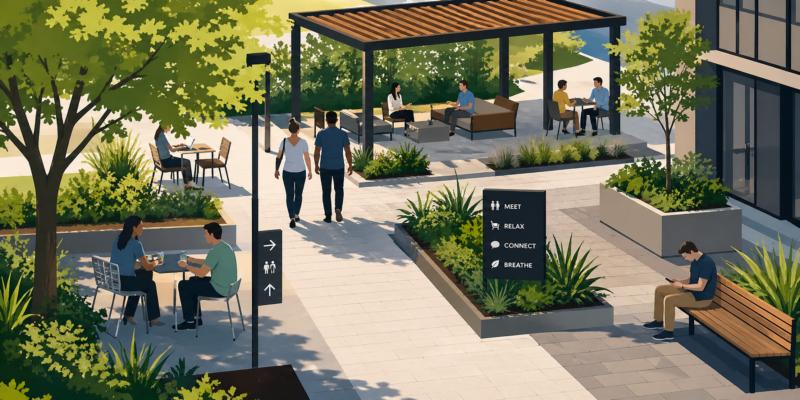
For property managers, outdoor space can be either a useful asset or a decorative patch of responsibility that requires mowing, weeding, and occasional apologizing. A lawn beside an office building, a courtyard behind apartments, or a green area near a retail center should do more than appear on a leasing brochure. It should give people a reason to step outside, pause, meet, eat, wait, work, or simply breathe for five minutes without staring at a loading dock.
Start With How People Already Move
Before adding benches, planters, lighting, or anything that looks impressive on a proposal, watch the traffic patterns. People are wonderfully predictable when they are late, carrying coffee, or trying to avoid awkward small talk. They take the shortest comfortable route, gather near entrances, avoid muddy corners, and rarely cross open grass unless the alternative is worse.A useful outdoor design starts by respecting these habits. Seating should sit near natural stopping points, not stranded in the middle of a lawn like it lost a bet. Paths should connect real destinations: entrances, parking areas, mailrooms, sidewalks, cafes, elevators, or shared amenities. If people already cut across a corner, that is not rebellion. It is data.
For commercial properties, good circulation improves both comfort and perception. A visitor who can move easily through the exterior space feels the property is managed with care. A tenant who can take a quick outdoor break without navigating a maze of shrubs is more likely to use the area regularly.
Give Each Area a Job
Unused outdoor spaces often suffer from vague purpose. They are “green areas,” which sounds pleasant until you ask what anyone is supposed to do there. A successful space has clear zones, even if they are simple.- A shaded seating zone for lunch breaks or short meetings
- A walking path for employees or residents who need movement during the day
- A small waiting area near entrances for visitors, rideshare pickups, or deliveries
- Open flexible space for casual events, tenant gatherings, or seasonal displays
Shade Is Not Optional
Nothing empties a seating area faster than direct sun at noon. Even the most optimistic employee will abandon a bench that feels like a preheated frying pan. Shade is one of the most decisive factors in whether an outdoor space is used consistently or ignored with quiet determination.Trees are the long-term solution, offering natural cooling and a more relaxed atmosphere. However, they require planning and patience. In the meantime, structures such as pergolas, canopies, or strategically placed umbrellas can provide immediate relief. The key is placement. Shade should cover seating areas during peak usage hours, not drift helpfully across a patch of decorative gravel no one intends to visit.
For property managers, this is where small investments deliver outsized returns. A shaded bench is used. An unshaded bench becomes a conversation piece about poor decision-making.
Comfort Beats Complexity Every Time
There is a temptation to make outdoor spaces visually impressive, filled with varied plantings, decorative elements, and ambitious layouts. While these features may look appealing in initial plans, they often complicate maintenance and reduce usability.Comfort is simpler and far more effective. People want stable seating, reasonable privacy, manageable noise levels, and a sense that they are allowed to be there without feeling in the way. Durable benches with backs, small tables, and consistent surfaces underfoot go further than elaborate design flourishes that require constant upkeep.
Low-maintenance materials should be prioritized. Native or well-adapted plants reduce watering needs. Clean, defined edges prevent beds from spilling into walkways. Irrigation systems should work quietly in the background, not surprise pedestrians with unexpected enthusiasm.
An outdoor space should not feel like it needs a caretaker following behind every user with pruning shears and a hose.
Encourage Use Without Forcing It
People rarely respond well to spaces that feel overly programmed. A courtyard filled with rigid layouts and obvious “intended uses” can feel restrictive. The best outdoor environments suggest possibilities without demanding behavior.A small cluster of seating can become a meeting spot, a lunch area, or a quiet place for a phone call. A path can serve walkers, casual conversations, or simply a momentary escape from indoor routines. Flexibility allows different users to find their own reasons to return.
For mixed-use or multi-tenant properties, this flexibility becomes especially valuable. Office workers, residents, visitors, and service providers all interact with the space differently. A design that accommodates variation will naturally see more consistent use.
It also helps to avoid placing everything too far apart. If seating is isolated, people hesitate to use it. If it is integrated into natural movement, it becomes part of the daily rhythm.
Grass Isn’t Always the Star Player
Large lawns often look appealing on paper but can struggle in practice. They require regular maintenance, are easily damaged by foot traffic, and frequently go unused unless programmed for specific activities.Breaking up expansive grass areas with pathways, seating zones, or planting beds creates structure and invites interaction. Even small changes, such as adding a defined edge or a transition between surfaces, can shift a space from decorative to functional.
This does not mean removing green space entirely. It means using it intentionally. A smaller, healthier lawn that supports actual use is far more valuable than a wide, empty field that exists primarily to be mowed.
Green Light for Real Use
Outdoor spaces earn their value through use, not appearance alone. When layout aligns with natural movement, when shade and comfort are prioritized, and when maintenance is manageable, people begin to adopt the space without prompting.A well-designed exterior area becomes part of daily routines rather than a forgotten feature. It supports quick breaks, informal conversations, and moments of quiet that make a property feel more livable and more thoughtful.
And perhaps most importantly, it stops being the place everyone walks past while wondering why no one ever sits there.
Article kindly provided by southjerseylandscapers.com