
Smart Placement Without the Guesswork
Commercial yards often suffer from the “temporary spot” syndrome—wood gets placed somewhere “just for now,” and six months later it has developed squatter’s rights. Picking a dedicated location is the grown-up option. It should be elevated, level, and far enough from vehicle pathways that forklifts don’t treat it like an obstacle course.A serious note: distance from buildings isn’t just a tidy habit. It reduces fire risks and helps deter pests that prefer to take the express lane from log pile to premises. This is the moment to think like an inspector rather than someone improvising their way through storage decisions.
Airflow-Friendly Stacking That Doesn’t Collapse Dramatically
Wood needs breathing room—not metaphorically, but literally. Good airflow dries it, protects it, and stops it from becoming a damp monument to poor planning. The trick is to stack pieces so air can wander freely through the gaps without turning the whole structure into a Jenga tower with commitment issues.For many commercial operations, cross-stacking the ends of large piles gives stability and forms tidy “bookends.” Between those bookends, maintain consistent rows with small gaps. Avoid pressing pieces together like they’re afraid of the cold; the more crowded they are, the wetter they stay.
Racks and Raised Platforms That Work With You
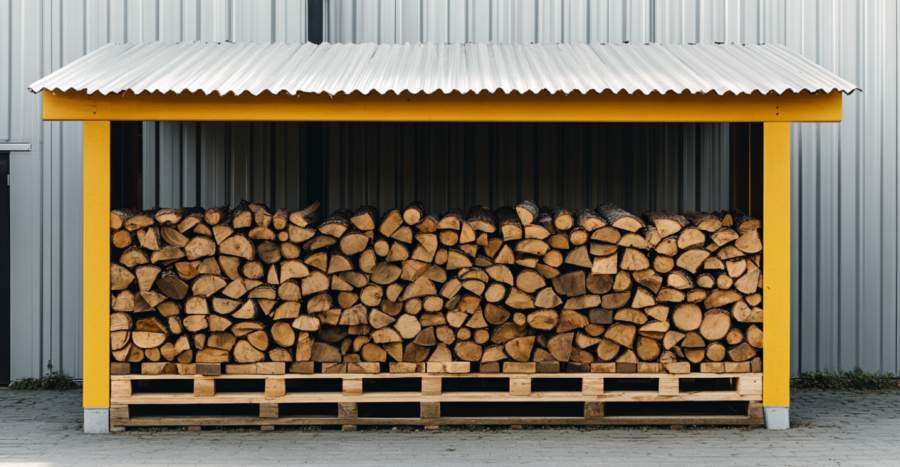
Keeping firewood off the ground is one of the simplest victories a business can achieve. Whether using metal racks, timber frames, or heavy-duty platforms, elevation protects stock from soil moisture, splashback, and the mysterious ground-level dampness that always appears even in dry weather.Some sites invest in modular rack systems designed for easy forklift access. These allow staff to rotate stock without rediscovering logs from a bygone era. Others use custom-built frames that maximise airflow, reduce clutter, and prevent piles from spreading across the yard like territorial cats.
Elevated setups also reduce the number of times staff must manually reposition logs—an ergonomic upgrade that earns gratitude from anyone who’s ever lifted wood on a Monday morning while questioning their career choices.
Palletisation for Efficiency and Sanity
Pallets turn unwieldy piles into manageable units. Businesses can store, move, and rotate stock with minimal fuss while avoiding the archaeological dig that happens when loose logs migrate unpredictably.- Stacking on ventilated pallets improves airflow and speeds drying.
- Pre-wrapped pallet cubes help keep species or moisture levels organised.
- Forklift-friendly layouts reduce handling time and keep loading areas running smoothly.
Avoiding Hazards in Busy Yards
Loading bays and commercial yards are chaotic enough without firewood attempting an escape. Clear lanes should be maintained at all times, especially where trucks reverse with the confidence of people who assume everything behind them will get out of the way.Moisture control is equally important—wet ground breeds slippery surfaces, fungal growth, and the sort of odour that makes wood seem like it’s planning a mutiny. Keeping the area clean and shored up with good drainage earns a rare moment of genuine peace in an outdoor site that usually refuses to behave.
Weather Protection That Doesn’t Smother the Stack
Covering firewood seems simple, but many commercial sites accidentally veer into “log suffocation.” Tarps that cling too tightly trap moisture, turning your well-meaning protection into a humidity incubator. The goal is shelter, not a spa day.A roofed structure with open sides is ideal. It keeps rain at bay while allowing air to move freely. If tarps are the only option, secure them over the top but leave the sides open. Think of it as giving the stack a hat, not a full winter coat. This single adjustment can prevent mould, decay, and the quiet shame of discovering an expensive delivery ruined by a tarp used with too much enthusiasm.
Site managers should also consider wind direction. A cover that turns into a sail during storms becomes a hazard with ambitions far beyond its job description. Using bungee cords, weighted edges, or fitted covers keeps the whole arrangement from attempting airborne stunts.
Staff Training Without the Eye-Rolls
A smart storage system collapses quickly if only one person understands it. Training sessions don’t need to resemble lecture halls; short, practical walk-throughs are enough. Staff should know how to stack for airflow, identify drying stages, and spot hazards before they become the theme of an incident report.It’s worth reinforcing that properly stored wood saves time. When employees realise they’ll spend fewer hours re-stacking collapsed piles or re-sorting mixed species, their enthusiasm for a tidy yard tends to skyrocket. Well, maybe not skyrocket, but at least achieve modest lift.
Some businesses sketch simple maps showing where each type of stock belongs. Others post printed guides with quick reminders. These tiny nudges prevent misunderstandings such as “I thought the wet logs lived behind the forklift charger,” which is how operational mysteries are born.
Orderliness Isn’t Glamorous, But It Works
Some paragraphs deserve a more serious tone, and this is one of them. Firewood storage affects safety, efficiency, and compliance. Stacks placed too close to structures invite pests and heighten fire risk. Poor ventilation leads to mould. Improper pallet use can cause collapses, putting staff at risk. These issues aren’t theoretical—they’re the predictable result of ignoring straightforward principles. When commercial sites apply consistent standards, they prevent incidents, preserve stock quality, and streamline day-to-day operations.Logs and Laughs Aside, Dry Wood Wins
Firewood will never win an award for cooperative behaviour, but with the right layout, even large commercial operations can keep stock orderly, accessible, and compliant. Give the wood some height, some air, some shelter, and some structure, and it will reward you by simply doing its job without drama. That alone makes all the planning worthwhile.Article kindly provided by finestfirewood.uk