
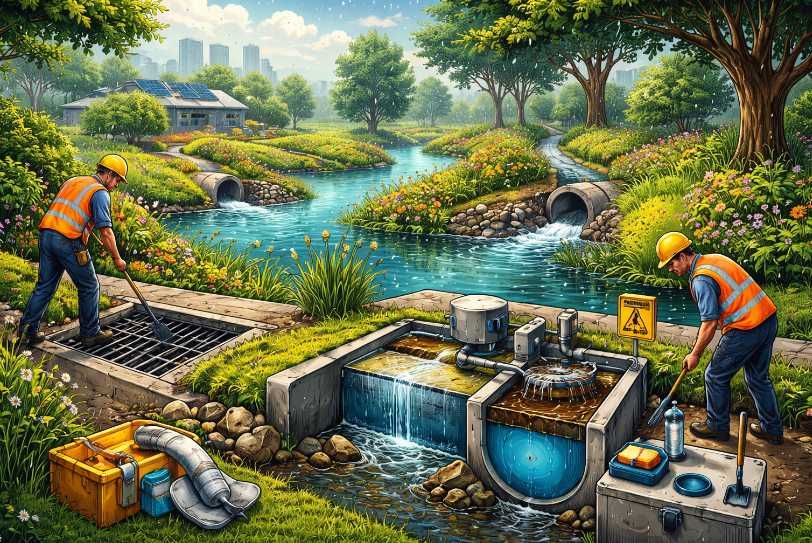
Sustainability goals and regulatory compliance are often managed in separate binders, sometimes by separate teams who only meet when something goes wrong. Integrating stormwater maintenance into both efforts creates a more resilient operation. It protects waterways, reduces liability, and keeps your site from becoming the case study nobody wants to star in.
Stormwater programs should not be limited to checking a box for permits. They should align with broader environmental objectives—water quality protection, pollution prevention, and responsible land stewardship. When maintenance is embedded into sustainability planning, it becomes proactive rather than reactive. That shift alone can lower regulatory risk and long-term costs.
Season-Aware Maintenance Schedules
Stormwater systems do not experience the year evenly. Spring runoff, summer downpours, autumn leaf fall, and winter freeze-thaw cycles each bring different stressors. A season-aware maintenance schedule anticipates these patterns instead of responding with crossed fingers.Develop a structured calendar that aligns with regional weather cycles and operational demands.
- Inspect catch basins and inlets before peak rainy seasons to ensure they are free of debris.
- Schedule sediment removal in detention ponds after heavy runoff periods.
- Increase inspections during fall to manage leaf accumulation that can clog conveyance systems.
- Check for ice-related damage in late winter and early spring.
There is also a morale benefit. Facilities teams prefer a clear plan to emergency scrambles in ankle-deep water. Planning ahead means fewer frantic calls and less improvisation involving shop vacuums and hope.
Oil Water Separator Upkeep
Oil water separators are the quiet guardians of industrial sites, intercepting hydrocarbons before they enter storm drains. When maintained properly, they function efficiently and extend equipment life. When ignored, they become expensive compliance liabilities.Routine inspection is non-negotiable. Accumulated oil and sludge must be removed before capacity is compromised. Establish thresholds for cleaning based on manufacturer guidance and site-specific discharge volumes. Record oil depth, sediment levels, and maintenance actions. Documentation is not busywork; it is evidence of responsible management.
Serious consequences accompany neglect. A malfunctioning separator can allow contaminated runoff to enter municipal systems or natural waterways, triggering fines and remediation costs. Reputational damage often follows regulatory action, and rebuilding trust can be far more difficult than cleaning a tank.
Training personnel to recognize warning signs—unusual odors, visible sheen downstream, slow drainage—adds another layer of protection. A separator is not a set-it-and-forget-it device. It requires oversight, just like any critical infrastructure.
Integrating separator upkeep into sustainability reporting strengthens environmental performance metrics. Quantifying recovered oil volumes, maintenance frequency, and system efficiency offers measurable proof of pollution prevention in action.
Vegetation Control That Works With Nature
Vegetation is either your best ally or your most persistent saboteur. Managed correctly, it stabilizes soil, filters pollutants, and slows runoff. Left unattended, it blocks channels, weakens embankments, and gives inspectors a reason to raise an eyebrow.A thoughtful vegetation management plan balances ecological function with operational control. Native grasses and deep-rooted plants are ideal for bioswales and detention basins because they enhance infiltration and reduce erosion. At the same time, invasive species and woody growth must be controlled before roots compromise liners or underground infrastructure.
Regular mowing schedules should reflect plant type and stormwater design. Overcutting can reduce filtration effectiveness, while neglect can obstruct flow paths. It is a narrow margin between “healthy buffer” and “abandoned field.”
Inspection teams should look for:
- Bare soil areas prone to erosion.
- Encroaching shrubs or trees near structural components.
- Sediment buildup smothering vegetation.
- Signs of burrowing animals destabilizing slopes.
A disciplined vegetation program supports sustainability targets by improving water quality and reducing the need for hard infrastructure upgrades. It also demonstrates environmental stewardship in a visible way. Few stakeholders complain about well-maintained green space.
Emergency Planning and Regulatory Readiness
Stormwater compliance does not end with routine maintenance. Extreme weather events, accidental spills, and infrastructure failures require a coordinated response plan. Without one, even a minor incident can escalate quickly.Emergency planning should include clear procedures for containment, notification, and corrective action. Staff must know who to contact, where shutoff valves are located, and how to deploy spill kits. Conducting periodic drills reinforces readiness and reveals weaknesses in response protocols.
Documentation is critical. Incident logs, corrective action reports, and follow-up inspections create a transparent record of accountability. Regulators assess not only the event itself but also the effectiveness of the response.
Integrating emergency planning into broader sustainability strategy ensures resources are allocated appropriately. Climate variability is increasing rainfall intensity in many regions. Designing and maintaining stormwater systems to withstand these shifts is no longer optional.
Cross-functional coordination strengthens resilience. Environmental managers, facilities teams, risk officers, and leadership should align on priorities. A compliance strategy that operates in isolation will struggle under pressure.
Making Compliance Flow Smoothly
Stormwater maintenance, when treated strategically, becomes more than a checklist. It turns into an operational discipline that protects assets, communities, and brand reputation. Season-aware schedules prevent predictable failures. Oil water separator upkeep blocks pollutants before they travel downstream. Vegetation management supports filtration and structural stability. Emergency planning prepares teams for the unpredictable.Serious organizations understand that regulatory risk is rarely caused by a single catastrophic oversight. It is usually the result of small maintenance gaps accumulating over time. Addressing those gaps systematically strengthens both sustainability performance and compliance posture.
There is a practical elegance to well-maintained stormwater infrastructure. Water enters, is treated appropriately, and exits without drama. Inspectors leave with minimal notes. Budgets remain intact. Teams move on to the next priority without recounting stories about floating debris and frantic phone calls.
Ultimately, integrating stormwater maintenance into sustainability and compliance strategy is about foresight. Water will always move. The question is whether your organization guides that movement responsibly or reacts when it goes off course. Keeping systems clean, documented, and prepared ensures that when the rain arrives unannounced, your site is ready to greet it with quiet confidence rather than a mop and a regret.
Article kindly provided by drainage-plumbing.co.uk