
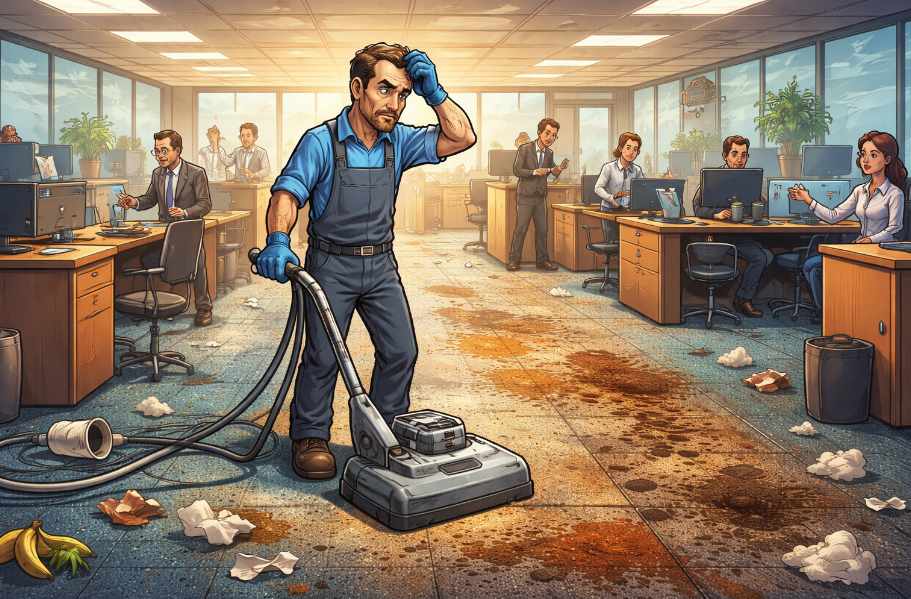
Some of this comes down to expectations. People imagine “clean” means “looks like new,” but commercial carpet is designed to hide soil until it can’t. That means the visible change after cleaning can be subtle, especially in older areas where wear has permanently changed the fibers. Still, if carpets consistently look dirty right after a clean, there are common culprits worth tackling.
Soil That Sinks and Soil That Sticks
Office carpets deal with two different troublemakers. First is dry particulate soil: dust, grit, street debris, and all the tiny bits that break loose from shoes and the outside world. These particles sink down between fibers, where they act like sandpaper and gradually dull the surface. Second is sticky soil: oils from skin, spilled drinks, tracked-in food residue, and cleaning product build-up. Sticky soil loves to grab onto the dry particulate soil and hold it like a magnet, creating that “why does it still look dark?” effect.Even a good extraction clean can miss what’s bonded to oily residue. If the carpet has a film of oil or detergent left behind, it can re-soil fast—sometimes within days. The carpet isn’t “attracting dirt” because it’s cursed; it’s attracting dirt because it’s slightly tacky.
Residue That Recruits More Dirt
One of the most common reasons carpets look worse after cleaning is leftover product. Too much shampoo, not enough rinsing, or using the wrong chemistry can leave a residue that dries invisibly but behaves like weak glue. Then foot traffic presses in fresh soil, and the carpet looks dirty again almost immediately. This is especially common in areas with frequent spot-cleaning—reception, corridors, near printers—where well-meaning people repeatedly “fix” spots with off-the-shelf products and a heroic amount of enthusiasm.Facilities teams can reduce this by standardizing spot-cleaning supplies and training staff on a simple rule: use less product than feels emotionally satisfying. If a spot needs half a bottle, it probably needs a different approach.
Wicking and the Ghost of Spills Past
Sometimes the carpet looks clean when damp, then stains reappear as it dries. That’s wicking. Deep soil and old spill residue live in the backing and lower layers. After cleaning, moisture travels upward as it evaporates, bringing dissolved residue to the surface. The result is a reappearing mark that makes it seem like nothing was cleaned at all, which is unfair to everyone involved.Wicking is more likely when:
- Spills soaked through the carpet and padding long ago
- Cleaning added moisture but didn’t fully extract it
- Drying time was slow due to humidity or poor airflow
Traffic Lanes and Optical Illusions
Commercial offices create “traffic lanes” the way rivers create channels. Even in open-plan spaces, people walk the same routes: door to desks, desks to coffee, coffee to meetings, meetings to snacks, snacks to regret. Over time, the carpet fibers in these lanes get crushed and abraded. Crushed fibers reflect light differently, so they can look darker even when they’re clean. That’s not soil; that’s wear.A quick test is to brush the fibers. If the area changes appearance when brushed or groomed, you’re dealing with pile distortion rather than dirt. Grooming after cleaning can dramatically improve the look of lanes by aligning fibers and reducing the “permanent shadow” effect.
Vacuuming Gaps That Undermine Everything
This part is serious: vacuuming is the foundation of carpet appearance. If dry soil isn’t removed regularly, wet cleaning turns it into a gritty paste that is harder to extract. Many offices vacuum often, but not always effectively. Wrong machine settings, worn brushes, full bags, clogged filters, or rushing through high-traffic areas can leave behind the very particles that make carpets look dull.A facilities team can get a lot of mileage from a simple audit: check vacuum condition, verify brush height, confirm filter maintenance, and focus effort where shoes do the most damage. Cleaning schedules should follow traffic, not floorplan symmetry. Reception may need far more attention than the quiet corner where someone has been on annual leave since last Tuesday.
Stains Versus Permanent Change
Not every mark is removable soil. Some discolouration is the result of dye damage, bleaching from cleaning chemicals, or long-term UV exposure from large office windows. Coffee and soft drinks can alter carpet dyes. Strong spot removers can do the same if overused. Sunlight, especially in south-facing meeting rooms, can quietly fade sections over months, leaving uneven colour that no amount of extraction will correct.It helps to distinguish between a removable stain and a permanent change in the fibre. A serious inspection under good lighting can reveal whether the issue is embedded soil or altered colour. In some cases, small patch repairs or tile replacements in modular carpet systems make more sense than repeated cleaning cycles that promise miracles and deliver mild disappointment.
Moisture Management and Odour Traps
Offices with heavy footfall during wet weather often face a different challenge: damp. When rain is tracked in repeatedly, moisture sinks deep into carpet and underlay. If drying is incomplete, odours and subtle dark patches can develop. Even if the surface appears dry, residual moisture below can attract fresh soil faster than expected.Facilities teams can address this with simple measures:
- High-quality entrance matting that is regularly maintained
- Prompt wet extraction in heavily soaked areas
- Improved airflow after cleaning through fans or adjusted HVAC settings
Cleaning Method Mismatch
Different carpets respond better to different cleaning methods. Some low-pile commercial carpets handle low-moisture cleaning well, allowing for quick turnaround and minimal disruption. Others benefit from periodic deep extraction to remove embedded soil. When the method does not match the carpet type or level of contamination, results can feel underwhelming.Routine maintenance cleans are designed to control soil levels, not perform dramatic visual transformations. If expectations are set too high, even a technically sound clean can be judged harshly. Periodic restorative cleans, scheduled strategically rather than reactively, can reset heavily used areas and extend carpet life.
Process, Not Panic
When a carpet still looks dirty after cleaning, the temptation is to assume incompetence or reach for more product. A more effective approach is systematic. Review vacuuming standards. Check for residue. Assess drying times. Identify traffic lanes and worn fibres. Evaluate whether stains are truly soil or permanent damage. Small process improvements often yield visible gains without increasing costs.Clear communication between facilities managers and cleaning providers matters. Sharing feedback about specific areas, timing cleans to minimise disruption, and agreeing on realistic outcomes builds better results over time. Carpets in offices endure thousands of footsteps a week. Expecting them to look untouched is optimistic. Expecting them to look well maintained is entirely reasonable.
Getting to the Root of the Matter
Office carpets rarely misbehave without cause. When they look dirty after cleaning, they are usually signalling residue, embedded soil, wear, moisture, or method mismatch. Treating the symptom without addressing the root simply restarts the cycle. A focused maintenance plan that combines effective vacuuming, appropriate cleaning methods, strong entrance control, and proper drying will do more than any emergency spot treatment applied in frustration at five in the afternoon.Carpets may not speak, but they do respond to consistency. When process replaces guesswork, the floor starts to look less like a crime scene for biscuits and more like a professional surface that supports the space above it.
Article kindly provided by rightchoicecarpetcleaning.co.uk