
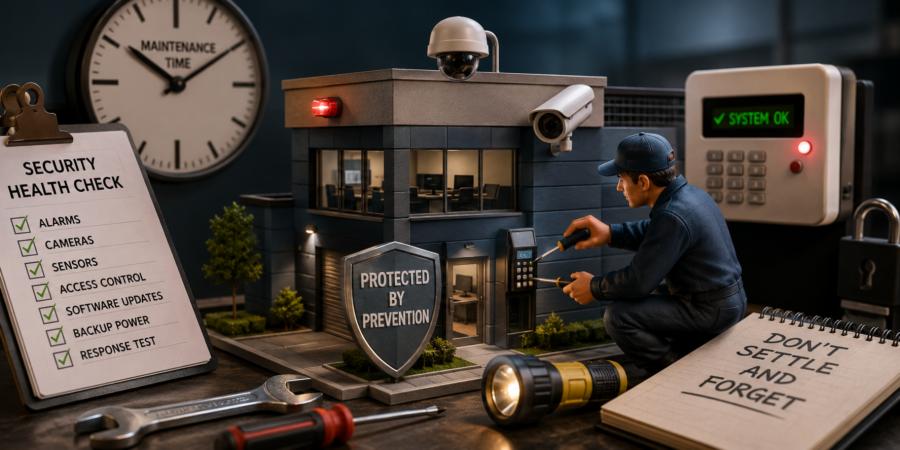
Business security systems often fall into an odd category of technology. They are installed with care, tested with enthusiasm, admired briefly, and then mentally relocated to the same shelf as emergency torches and office shredders — important, certainly, but somehow expected to function forever without complaint. That assumption creates risk.
Commercial alarms, CCTV systems, and access control networks are not decorative wall features with flashing lights attached for dramatic effect. They are operational infrastructure. Businesses depend on them to protect assets, staff, premises, and continuity. Yet many organisations still treat security maintenance as optional rather than essential.
Security Technology Is Still Technology
No sensible business owner expects servers, company vehicles, or HVAC systems to maintain themselves indefinitely. Security systems deserve the same practical mindset.A commercial security setup contains software, sensors, communication pathways, power supplies, cameras, and control hardware. Every one of those components ages, drifts, or develops faults over time. Dust settles inside detectors, batteries weaken, firmware becomes outdated, and environmental conditions gradually affect performance.
A camera mounted high in a warehouse may appear perfectly healthy while producing footage that looks like it was filmed through a steamed-up takeaway container. Motion sensors can become less reliable. Access control readers may respond more slowly or reject valid credentials. None of these problems announce themselves with dramatic orchestra music and flashing warning signs.
They simply reduce reliability little by little.
That gradual decline creates a dangerous illusion. Because systems often continue working partially, businesses assume everything remains fully operational.
Testing Is Not Bureaucracy
Routine testing is sometimes viewed as paperwork disguised as maintenance. In reality, testing confirms whether protection still performs as intended.Structured testing schedules help identify weaknesses before they become incidents. Depending on the system and operating environment, testing may involve:
- Alarm trigger verification
- Communication path testing
- Battery and backup power checks
- Camera image quality reviews
- Access control functionality checks
- Sensor alignment and detection testing
Some businesses discover faults only after a break-in, equipment theft, or security investigation. That moment tends to inspire uncomfortable meetings and unusually intense interest in service records.
Testing should not be viewed as disruption. It is confirmation that protective infrastructure still deserves the confidence placed in it.
Software Ages Faster Than Hardware
Many modern security systems operate as connected platforms rather than isolated devices. Cameras link to networks, access systems integrate with databases, and alarm monitoring may rely on cloud services or remote communications.That connectivity creates efficiency, but it also introduces responsibility.
Software updates and firmware maintenance are not optional extras designed to irritate IT departments on quiet afternoons. Updates often address vulnerabilities, improve reliability, and maintain compatibility between devices. Ignoring them can expose businesses to security gaps or performance failures.
A neglected software environment can create unusual situations. Doors refuse valid access cards. Cameras vanish mysteriously from management dashboards. Systems decide to communicate in error codes that resemble licence plate numbers from another dimension.
The serious concern sits beneath those inconveniences. Outdated software may weaken the integrity of an entire security framework.
Businesses that depend on integrated security should maintain documented update schedules and ensure changes are performed methodically rather than during moments of mild panic.
Compliance Is More Than a Checkbox
Security maintenance also intersects with compliance, insurance requirements, and duty of care obligations.Many industries operate within regulatory environments where security performance matters. Healthcare facilities, warehouses, logistics operators, retail sites, and commercial offices may face specific obligations regarding access management, surveillance retention, or alarm functionality.
Poor maintenance can create exposure extending well beyond equipment failure.
Insurers may examine whether systems were operational and appropriately maintained during incidents. Investigations following theft or unauthorised access often review maintenance records and system performance. Missing documentation or neglected servicing can complicate claims and liability discussions.
This is not administrative theatre. Documentation demonstrates that systems were actively managed rather than merely admired from a respectful distance.
Keeping Risk Behind Closed Doors
Security systems rarely ask for applause. Their success is usually measured by uneventful days, uninterrupted operations, and problems that never reach the front page of company discussions.That quiet reliability depends on maintenance.
Businesses invest heavily in premises, inventory, technology, and staff. Leaving protective infrastructure unattended undermines those investments in ways that may remain invisible until a critical moment arrives.
Commercial security should be treated like any other operational asset — monitored, serviced, updated, and reviewed with discipline.
Because when alarms fail, cameras blur, or access systems stumble, the conversation changes quickly. Suddenly everyone becomes deeply interested in maintenance history, including the person who once declared, with heroic confidence, that the system would probably be fine forever.
Reliable protection is not built on hope, crossed fingers, or a control panel that still blinks reassuringly at reception. It is built on consistent care that keeps risk where it belongs — outside the door.
Article kindly provided by back2base.net.au