
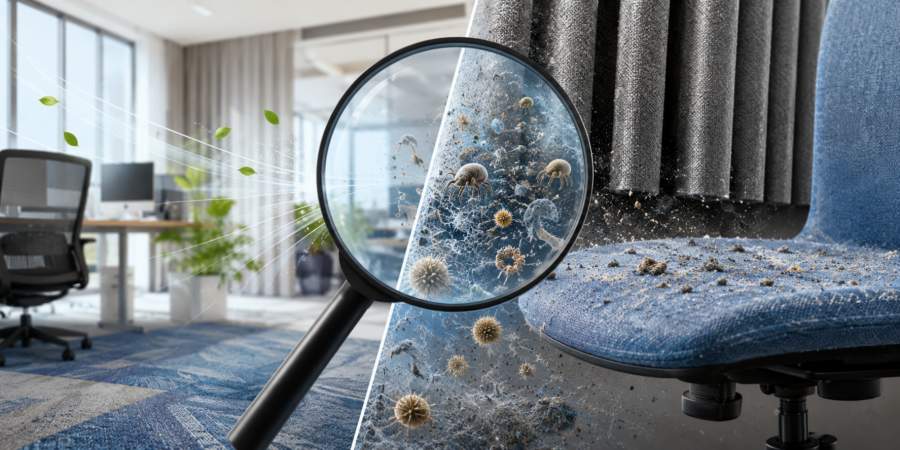
Soft furnishings often look harmless. Chairs sit politely around tables, curtains mind their own business, carpets absorb footsteps, and acoustic panels make conference calls sound less like they are being held inside a biscuit tin. Yet these materials can collect dust, skin particles, pollen, food crumbs, fibres, moisture, and odours over time. The result is a workspace that appears clean at a glance but still feels stale, stuffy, or vaguely suspicious by mid-afternoon.
Why Soft Surfaces Hold More Than You Think
Hard surfaces are fairly straightforward. A desk gets wiped, a glass door gets polished, and everyone pretends not to notice the fingerprints returning within seven minutes. Soft furnishings are different because they are porous, textured, and often layered. Dust and allergens do not simply sit on top; they settle into fibres and seams where casual cleaning rarely reaches.Office carpets are especially talented at this. They receive dirt from shoes, fibres from clothing, crumbs from hurried lunches, and whatever mysterious debris arrives after a busy Monday. Chairs add their own contribution, particularly in shared spaces where upholstery is used daily by different people. Curtains, blinds with fabric elements, and acoustic wall panels can also trap airborne particles that circulate through heating, ventilation, and air conditioning systems.
This matters because indoor air quality affects more than comfort. Poor air can contribute to irritation, headaches, tiredness, and reduced concentration. In workplaces where people already spend hours under artificial lighting discussing quarterly targets, the air should not be adding its own agenda.
The Smell Test Is Not a Strategy
Many businesses only notice soft furnishing problems when odours appear. By then, the issue has usually been building for some time. Fabric and fibres can absorb smells from food, damp coats, cleaning products, pets brought into flexible offices, and general human presence. Nobody wants to admit that “general human presence” has a scent, but every packed lift has submitted evidence.Relying on air fresheners can make the problem worse. Heavy fragrances may cover odours briefly, but they do not remove trapped particles or moisture. In some offices, the result is a confusing blend of old carpet, artificial citrus, and panic.
Maintenance Habits That Actually Improve Air Quality
Better air quality does not require turning the office into a laboratory with everyone wearing shoe covers and whispering near the photocopier. Small, consistent maintenance habits usually make the biggest difference.Vacuuming is one example. A quick pass over visible dirt is not enough for commercial carpets and upholstered furniture. High-traffic areas benefit from deeper cleaning using equipment with effective filtration systems that remove fine particles instead of redistributing them into the air like an enthusiastic leaf blower indoors.
Periodic deep cleaning is equally important. Carpets and fabric chairs should be professionally cleaned at scheduled intervals, particularly in busy offices, waiting rooms, coworking spaces, and meeting areas. Moisture extraction matters here because damp fibres can create ideal conditions for mould and unpleasant smells. Nobody wants a boardroom carrying the emotional atmosphere of a forgotten gym bag.
Businesses can also reduce airborne dust by reviewing fabric-heavy design choices. Thick curtains, oversized upholstered seating, and decorative fabric panels may look impressive initially, but they demand regular upkeep. If maintenance is inconsistent, those surfaces quietly become storage units for allergens.
Simple operational changes can help too:
- Rotate and clean shared seating regularly
- Use entrance matting to reduce outdoor dirt entering carpets
- Ensure ventilation systems are properly maintained
- Address spills and moisture immediately
- Schedule routine upholstery and carpet cleaning instead of waiting for visible problems
Comfort Is Part of Workplace Experience
Air quality influences how people feel in a space, even when they cannot identify the reason directly. Employees often describe cleaner environments as fresher, calmer, or easier to work in. Clients and visitors tend to notice the same thing instinctively.A workspace with clean soft furnishings feels maintained and cared for. That perception affects morale more than many businesses realise. Staff may not compliment freshly cleaned acoustic panels during Monday meetings, but they will notice when the office stops feeling heavy and stale halfway through the day.
There is also a practical side to this. Cleaner environments can support better longevity for office furnishings, reducing wear and replacement costs over time. Dirt trapped in fibres gradually damages materials through friction and buildup. Regular maintenance protects appearance as well as air quality.
Fabric of Office Life
Modern offices spend enormous amounts on lighting, furniture layouts, branding, and coffee machines capable of producing drinks with names no one can pronounce confidently. Meanwhile, neglected carpets and upholstery quietly influence the atmosphere every single day.Soft furnishings shape how a workplace smells, feels, and functions long after the excitement of a redesign fades. Keeping those materials properly maintained is less about appearances and more about creating an environment where people can think clearly, work comfortably, and avoid wondering whether the meeting room has been storing yesterday’s lunch beneath the chairs.
Clean air rarely attracts applause. People simply settle into the space more easily, focus better, and stop opening windows in February with the determination of someone escaping a submarine.
Article kindly provided by cinderellacleaning.co.uk