
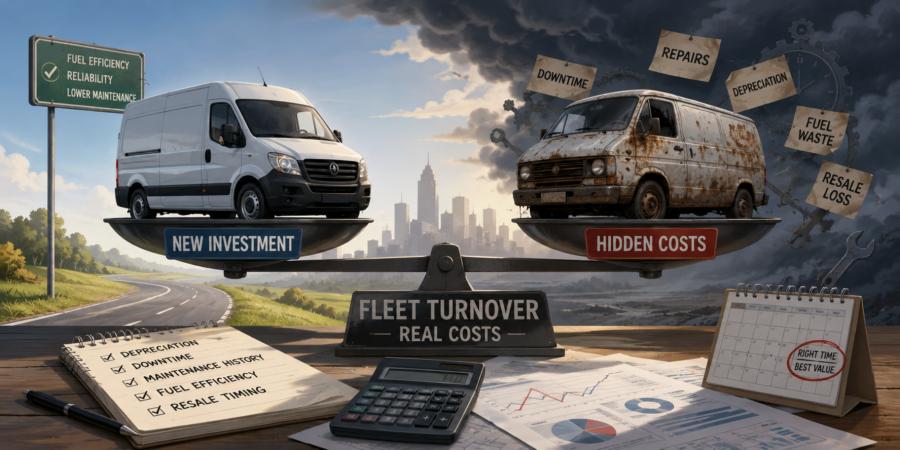
For SMEs and operations managers, replacing business vehicles is rarely a simple upgrade. The decision touches depreciation, downtime, maintenance history, fuel economy, and resale timing, all while budgets glare from the corner like disappointed accountants. Choosing the wrong moment to retire vehicles can quietly drain profits for years.
Depreciation Never Takes a Day Off
Depreciation is the silent passenger in every fleet vehicle. Unlike staff members, it does not ask for holidays, birthday cake, or flexible working hours. It simply lowers vehicle value with relentless dedication.A new commercial vehicle often loses a significant portion of its value within the first few years. That decline creates a difficult balancing act. Replacing vehicles too early means absorbing steep depreciation losses before extracting enough operational value. Keeping them too long, however, can trigger rising maintenance costs and reliability concerns.
Many businesses focus heavily on monthly payments or purchase prices while overlooking total ownership costs. A shiny replacement van may look financially sensible compared with an aging unit, yet the depreciation curve might suggest otherwise. Timing matters more than enthusiasm.
Serious fleet planning requires understanding how each vehicle depreciates within its specific operating environment. Mileage, usage patterns, accident history, and market demand all shape resale value. Two identical vans can end their careers with dramatically different financial stories.
Downtime Carries Its Own Invoice
Vehicle replacement decisions are often triggered by visible repair bills, but downtime may be the more expensive problem.When a vehicle sits in a workshop, business operations rarely pause politely in solidarity. Deliveries are delayed, appointments shift, staff schedules become tangled, and customer satisfaction can suffer. One unreliable vehicle can spread disruption through an entire operation.
The hidden cost of downtime includes several moving parts:
- Lost productivity from unavailable vehicles
- Rental or temporary replacement expenses
- Administrative disruption and scheduling changes
- Potential reputational damage with customers
Certain paragraphs about fleet turnover deserve sober treatment because the stakes are genuine. Businesses relying on transportation infrastructure cannot afford decisions driven solely by short-term cash preservation. Operational continuity has measurable financial value.
Maintenance History Tells the Truth
Maintenance records are less glamorous than showroom brochures but considerably more honest.A well-maintained vehicle with documented servicing may remain economically viable longer than expected. Conversely, poor maintenance history can accelerate replacement needs regardless of vehicle age. Service gaps, recurring mechanical failures, and unresolved repair patterns often reveal problems that surface later as larger financial liabilities.
Operations managers should evaluate trends rather than isolated incidents. One expensive repair does not automatically justify retirement. Persistent failures affecting core systems are another matter entirely.
Maintenance data helps businesses identify when repair spending shifts from manageable upkeep into diminishing returns. That tipping point rarely announces itself with dramatic music. It arrives gradually, disguised as “just one more repair.”
Fuel Efficiency Changes the Equation
Fuel costs have a habit of behaving like house guests who promised to stay one night and somehow learned where the biscuit tin is kept.Older fleet vehicles frequently consume more fuel than modern alternatives, especially when technology improvements and emissions standards enter the picture. For high-mileage businesses, even modest efficiency gains can reshape long-term operating costs.
Yet fuel efficiency should not be examined in isolation. A replacement vehicle may deliver impressive consumption figures, but acquisition costs, insurance adjustments, and depreciation still influence the broader financial picture. A newer model that saves fuel but introduces heavier financing obligations may not produce meaningful savings for several years.
Serious fleet analysis weighs fuel performance against total cost of ownership rather than treating fuel economy as a standalone victory. Businesses covering large service territories or managing delivery routes often benefit from modelling several replacement scenarios before making decisions.
Electric and hybrid options further complicate the discussion. Charging infrastructure, route suitability, maintenance requirements, and residual values all deserve scrutiny. Some fleets benefit significantly from electrification, while others may discover that enthusiasm outran operational practicality.
Resale Timing Is Part Strategy Part Patience
Fleet resale timing is often underestimated, despite carrying meaningful financial consequences.Vehicle markets fluctuate according to supply, demand, economic conditions, and sector-specific trends. Selling too late can expose businesses to sharp value declines, particularly if vehicles accumulate excessive mileage or enter periods of weaker market demand.
Waiting until vehicles are visibly exhausted may feel economical, but buyers and dealers tend to view heavily worn fleet units with the enthusiasm normally reserved for expired office yoghurt.
A disciplined resale strategy often involves predetermined replacement windows supported by market data. Rather than reacting emotionally to breakdowns or sudden expenses, businesses establish clear benchmarks tied to mileage, maintenance costs, and residual value targets.
This structured approach creates predictability. It also reduces panic purchasing, which rarely produces optimal fleet decisions.
Some organisations benefit from staggered turnover schedules instead of replacing large portions of the fleet simultaneously. Spreading replacement activity across several years helps smooth capital expenditure and reduces exposure to sudden market shifts.
Fleet Decisions Need a Long Lens
Replacing business vehicles deserves strategic attention rather than rushed approval meetings and optimistic guesswork.The cheapest-looking option is not always the least expensive over time. Depreciation, downtime, maintenance patterns, fuel efficiency, and resale timing interact in ways that can either support or undermine profitability. Ignoring one factor often distorts the entire decision.
For SMEs, fleet management carries particular pressure because margins may be tighter and operational disruption harder to absorb. Every vehicle represents both an asset and a financial commitment that shapes business performance beyond monthly payments.
Careful analysis can uncover opportunities to extend vehicle life responsibly or justify earlier replacement when operational costs begin climbing. Either outcome is valid when supported by reliable data.
Putting the Brakes on Costly Guesswork
Fleet turnover is rarely about replacing tired vehicles with fresher ones and celebrating with dealership coffee that tastes faintly of cardboard ambition. It is a financial decision wrapped inside an operational one.Businesses that understand the hidden costs behind replacement timing position themselves more effectively for long-term stability. Vehicles may eventually wear out, but planning should not.
The strongest fleet strategies are built on evidence, patience, and a willingness to look beyond purchase price alone. When replacement decisions are approached with discipline rather than urgency, the road ahead usually becomes less expensive—and considerably less noisy from the workshop waiting area.
Article kindly provided by usedcarscrewe.uk