
Then a letter arrives at the old address.
That single envelope is often the first sign that moving home involves more than transporting possessions from one location to another. Updating an address sounds simple enough, yet it routinely causes months of inconvenience, missed correspondence, delayed deliveries, and administrative confusion. A surprising amount of modern life is attached to one line of text, and when that line is wrong, the results can range from mildly irritating to financially painful.
Start With the Serious Stuff
Some address changes deserve immediate attention because the consequences of delay can be significant. Banks, credit card providers, pension companies, insurers, tax authorities, driving licence records, vehicle registration documents, and electoral records should be near the top of the list. These are not the accounts to update three months later while eating cereal from a saucepan because the bowls are still missing.Financial institutions need your current address for security checks, fraud prevention, replacement cards, statements, and legal notices. Government bodies may send important documents by post, and missing them can create problems that are far more annoying than changing the address in the first place.
- Banks, credit cards, loans, and savings accounts
- Tax records and national insurance or social security details
- Driving licence and vehicle registration records
- Home, car, travel, health, and life insurance providers
- Pension providers, investment accounts, and workplace benefit schemes
The Everyday Accounts That Cause Sneaky Trouble
Once the formal records are handled, turn to the accounts that quietly run your daily life. Online shopping profiles, food delivery apps, phone contracts, broadband accounts, streaming services, magazine subscriptions, gym memberships, pharmacy accounts, and loyalty cards all need updating. Otherwise, your new toothbrush, birthday gift, or emergency replacement charger may enjoy a peaceful life on someone else’s doorstep.Online retailers are especially easy to forget because checkout pages often autofill old details. One careless click can send a parcel on a nostalgic trip to your previous home. Before placing any order after moving, check the delivery address, billing address, and saved payment details. Autofill is helpful until it develops a sentimental attachment to your past.
Medical Records Are Not Optional Admin
Healthcare providers should be updated as soon as possible. Doctors, dentists, opticians, pharmacies, specialists, and private healthcare accounts may all hold address details. Appointment letters, test results, reminders, prescriptions, and invoices can still arrive by post, even when most communication feels digital.This is one area where a serious approach matters. An outdated address can delay important health information or create privacy issues if sensitive letters reach the wrong place. It is worth checking every provider individually rather than assuming one update will magically travel through the system wearing a little administrative cape.
Utilities, Council Records, and the Final Meter Reading
Utility companies should be told both when you leave the old property and when you arrive at the new one. Gas, electricity, water, internet, and waste services all need accurate dates, readings, and contact details. Take photos of meter readings on moving day, because future-you will not remember the numbers, no matter how confidently current-you claims otherwise.Local authority or municipal records also need attention. Council tax, waste collection, parking permits, resident schemes, school transport, and local service registrations may all depend on your address. If you move areas, you may need to close one account and open another rather than simply edit your details.
- Submit final meter readings for the old property
- Register utilities at the new property from the correct move-in date
- Update council tax or local property records
- Cancel or transfer parking permits and local passes
- Check waste collection schedules for the new address
Subscriptions Are Tiny Traps With Monthly Fees
Subscriptions are easy to ignore because each one seems small. Then six months later, a box of coffee pods, razors, pet food, vitamins, or craft supplies is still being sent to your old address like a loyal but confused pigeon. Check every recurring delivery, including the ones you forgot you started during a suspiciously enthusiastic Sunday evening.Also review digital accounts that use your address for billing. Streaming platforms, app stores, software subscriptions, cloud storage, gaming accounts, and memberships may not post anything to you, but an outdated billing address can still cause payment failures or security checks at awkward moments.
Use a System Before the System Uses You
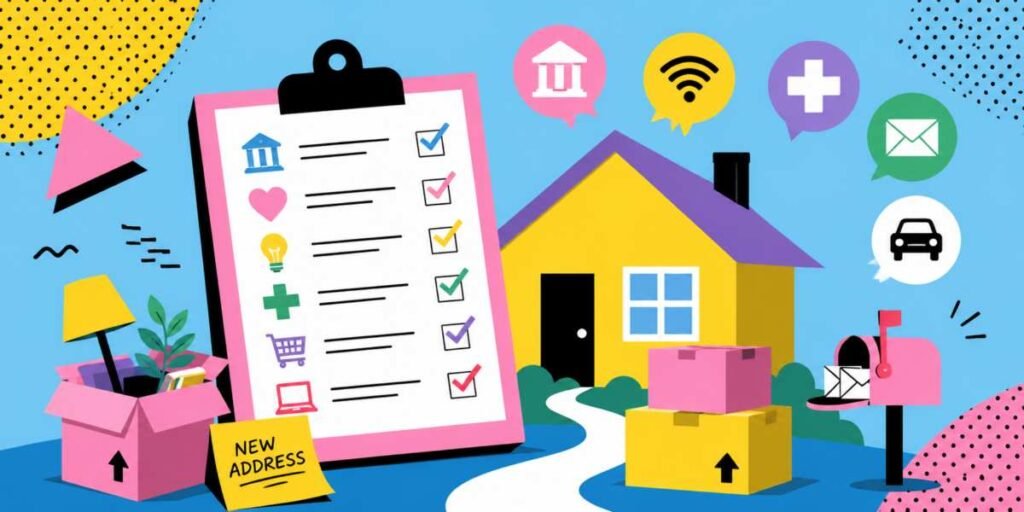
The easiest way to manage an address change is to create one central checklist. Start with serious records, then move through household services, healthcare, work, schools, subscriptions, online accounts, and personal contacts. Keep a note of the date each update was made, especially for banks, insurers, government records, and utilities.Mail redirection is also worth considering. It is not a substitute for updating your details, but it gives you a safety net while you hunt down the forgotten accounts. Every redirected letter is a clue. Treat it like a small paper detective pointing at an account that still thinks you live somewhere else.
No Place Like the Right Address
Changing address details is rarely exciting, but it protects your money, privacy, deliveries, healthcare communication, and general sanity. A move already comes with enough chaos: mystery cables, missing scissors, and the ancient box labelled “misc” that nobody dares open. Updating your records will not make unpacking fun, but it will stop your old address from quietly running parts of your life without permission.Handle the important accounts first, then work steadily through the rest. The goal is simple: make sure your post, parcels, bills, records, and reminders all know where you actually live. That way, your new home can become your real administrative home too, instead of just the place where all the cardboard currently resides.
Article kindly provided by sprawdzadres.pl