
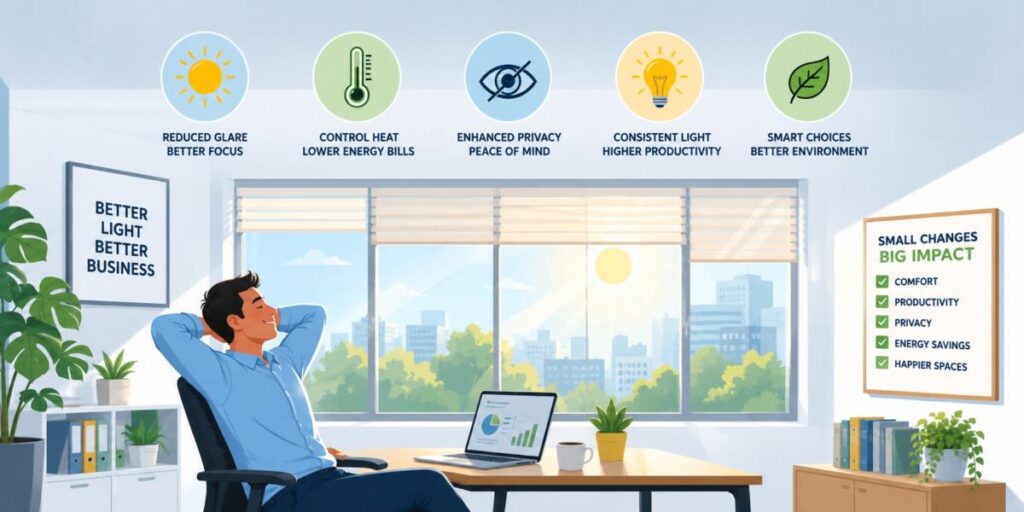
It pours through glass, lands across desks, bounces off screens, heats meeting rooms, exposes private areas, and generally behaves like an overconfident intern with no induction training. In commercial buildings, windows are often treated as fixed background features: useful for daylight, nice for views, and occasionally blamed when someone cannot see their spreadsheet. But poor window management can quietly affect productivity, customer comfort, staff wellbeing, energy use, and even how professional a business feels.
The cost is rarely obvious at first. No invoice arrives marked “avoidable glare” or “sunbeam-related decision fatigue.” Instead, the impact appears through lower concentration, higher cooling demand, awkward customer experiences, and spaces that never feel quite right. For businesses trying to improve performance without major refurbishment, windows are a surprisingly good place to begin.
Glare Is More Than a Mild Irritation
Glare sounds harmless until it becomes part of the working day. A screen angled into direct sunlight can turn a simple task into a squinting contest. Staff shift chairs, adjust monitors, lean sideways, close one eye like amateur pirates, and lose focus in small but repeated ways.Over time, those interruptions matter. If employees are constantly fighting bright patches, reflections, or changing light levels, concentration suffers. It is difficult to produce careful work when your monitor looks like it is auditioning to become a mirror.
In customer-facing environments, glare can be just as damaging. A restaurant table flooded with harsh afternoon sun may look inviting from across the room, then become a slow-cooked complaint zone. In clinics, offices, showrooms, and reception areas, uncomfortable light can make visitors feel exposed, rushed, or simply less at ease.
Heat Gain Has a Habit of Joining the Payroll
Solar heat gain is one of those building issues that quietly turns into a financial issue. When sunlight streams through unmanaged windows, indoor temperatures rise, especially in rooms with large glazing, south-facing elevations, or limited ventilation.The result is usually more cooling, more complaints, and more energy use. Air conditioning systems end up working harder to solve a problem that began at the window. Meanwhile, one side of the office feels like a greenhouse, while the other side has people reaching for jumpers. A building should not require staff to dress for three microclimates before lunch.
This imbalance can also affect equipment, stock, furnishings, and displays. Heat and direct sunlight may fade materials, make waiting areas uncomfortable, and reduce the usable flexibility of certain rooms. A meeting space that becomes unbearable after 2pm is not really a meeting space; it is a scheduling trap with chairs.
Privacy Problems Often Go Unnoticed Until They Matter
Many businesses focus heavily on visibility and openness, which makes sense. Natural light and transparent spaces can create a welcoming atmosphere. However, there is a difference between openness and accidental oversharing.Poorly managed windows can create privacy challenges for both employees and customers. In offices, staff may find themselves working within full view of neighbouring buildings, public footpaths, or busy streets. Sensitive information displayed on screens can become surprisingly visible from outside, particularly after dark when interior lighting effectively turns windows into giant display panels.
Customer-facing organisations face similar concerns. Healthcare practices, financial advisers, legal firms, and other professional services often handle confidential discussions. Even when conversations cannot be heard, a lack of visual privacy can make people feel uncomfortable. That discomfort can influence how openly clients communicate and how positively they perceive the business.
Privacy does not require turning every room into a bunker. Thoughtful window management can preserve natural light while reducing unnecessary visibility, creating spaces that feel professional and secure without appearing closed off.
Inconsistent Lighting Creates Hidden Productivity Losses
One of the less discussed effects of poor window management is inconsistency. A workspace that feels comfortable at 9am may feel completely different by mid-afternoon.Changing light conditions can affect concentration, comfort, and even mood. Employees working near windows often experience very different conditions from colleagues sitting further inside the building. One person enjoys balanced daylight while another battles reflections and excessive brightness.
These differences may seem minor in isolation, but they accumulate throughout the working week. Small adjustments, frequent interruptions, and ongoing discomfort can reduce efficiency without attracting attention from management reports or performance metrics.
Buildings perform best when lighting conditions remain relatively stable. Predictable environments allow people to focus on their work rather than constantly adapting to changing surroundings. Most businesses spend considerable effort refining processes and workflows. It makes little sense to ignore an environmental factor that influences staff performance every day.
Practical Improvements Without Major Refurbishment
Addressing window-related issues does not necessarily require replacing glazing or undertaking expensive building projects. Many improvements can be achieved through relatively straightforward measures.Businesses looking to optimise natural light should consider solutions that balance brightness, comfort, privacy, and temperature control. Effective options may include:
- Adjustable window coverings that allow flexible light control throughout the day
- Targeted shading for areas most affected by direct sunlight
- Room-by-room assessments to identify problem zones
- Improved positioning of desks, seating areas, and screens
- Automated systems that respond to changing daylight conditions
A Clearer Outlook for Business Performance
Windows influence far more than aesthetics. They affect how employees work, how customers feel, how much energy a building consumes, and how effectively spaces perform throughout the day.When window management is overlooked, businesses often absorb a collection of small but persistent costs. Higher cooling bills, reduced productivity, privacy concerns, inconsistent comfort, and less effective use of space can gradually erode operational performance. Because these issues develop slowly, they are easy to underestimate.
Improving window management is rarely the most glamorous item on a facilities agenda. It does not generate headlines, and nobody is likely to organise a celebration for reducing glare in Conference Room B. Yet the results can be substantial. Better comfort, improved efficiency, stronger privacy, and lower energy consumption all contribute to a healthier working environment.
Viewed in that light, windows stop being passive architectural features and become active contributors to business success. Sometimes the clearest opportunity to improve a building is sitting right in front of everyone, framed by glass.
Article kindly provided by inspired-shutters.co.uk