
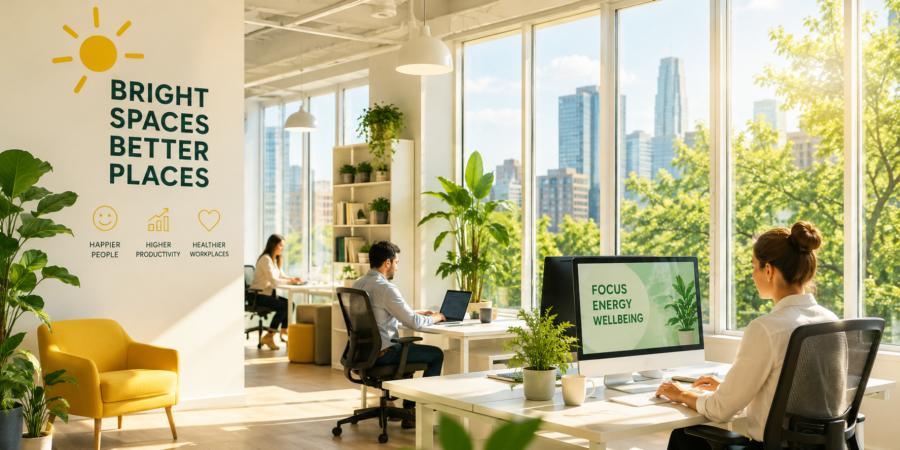
For decades, workplace planning focused heavily on maximising floor space. Rows of desks were squeezed into available areas, fluorescent lighting took over, and access to daylight was often treated as a bonus rather than a necessity. Today, a growing body of research points in a different direction. Exposure to natural light has been linked to improved mood, better sleep patterns, enhanced concentration, and greater workplace satisfaction. These benefits extend far beyond personal comfort. They can influence how effectively people perform throughout the working day.
Daylight and the Human Brain
Human beings evolved under the rhythm of natural daylight. Although modern offices are packed with technology, the body still responds strongly to light levels. Natural light helps regulate circadian rhythms, which influence sleep quality, alertness, and energy levels.When employees spend long periods in poorly lit environments, fatigue can become a regular companion. Concentration dips, motivation declines, and even relatively straightforward tasks can begin to feel more demanding. Anyone who has stared at a spreadsheet at three in the afternoon and suddenly forgotten what column they were working on will understand the effect.
Access to daylight helps support mental alertness throughout the day. Employees who work in naturally lit environments often report feeling more engaged and less drained by the time they leave the office. That matters because sustained focus is one of the most valuable resources any organisation possesses.
The Link Between Wellbeing and Performance
Workplace wellbeing is no longer viewed as a soft benefit that sits on the edge of business strategy. Organisations increasingly recognise that healthier employees tend to be more productive employees.Natural light contributes to wellbeing in several ways. It can help reduce feelings of stress, improve mood, and create a more pleasant environment overall. While no amount of sunlight can completely eliminate the frustration of an inbox containing 147 unread messages before 9 a.m., it can help create conditions that support better mental resilience.
A brighter workplace often feels more welcoming and less restrictive. Employees are more likely to feel comfortable in environments that connect them with the outside world rather than isolating them from it. This seemingly simple factor can influence morale in meaningful ways.
Businesses that invest in healthier working environments frequently discover that workplace improvements generate benefits beyond employee satisfaction. Stronger engagement often translates into better collaboration, improved customer interactions, and higher-quality work.
Reducing Absenteeism Through Better Workplace Design
Absenteeism remains a significant challenge for many organisations. While illness can never be eliminated entirely, workplace conditions can influence how employees feel both physically and mentally throughout the year.Natural light plays a role in supporting healthier indoor environments. Employees who have access to daylight often report better sleep quality, which can have a direct impact on overall health and daily performance. Better-rested individuals are generally more capable of handling workloads, adapting to challenges, and maintaining consistent attendance.
There is also a psychological component. Dark, enclosed workplaces can contribute to feelings of lethargy and disengagement. Over time, these effects may influence morale and workplace satisfaction. In contrast, bright and well-designed environments often encourage a stronger sense of connection to the workplace itself.
When employees feel better about where they work, they are more likely to remain engaged with their roles. While nobody has ever called in sick because sunlight was visible from their desk, the overall impact of a healthier environment should not be underestimated.
Natural Light as a Competitive Advantage
Recruitment and retention have become increasingly important concerns for businesses across many sectors. Salary remains important, but workplace quality is gaining influence during hiring decisions.Candidates evaluating potential employers often consider the working environment alongside compensation and career opportunities. Bright, comfortable offices with strong access to daylight can create a positive impression from the moment someone walks through the door.
Commercial property owners are noticing this shift as well. Buildings that offer attractive working environments frequently appeal to a wider range of tenants. Features such as large glazed areas, open-plan layouts, and improved daylight penetration are becoming more desirable in competitive property markets.
In many respects, natural light has become part of a broader conversation about workplace experience. Businesses are increasingly recognising that productivity is influenced not only by processes and technology but also by the physical spaces where people spend their time.
Practical Approaches for Offices and Commercial Buildings
Improving access to natural light does not always require a complete building overhaul. Many organisations can make meaningful improvements through targeted upgrades and refurbishment projects.Common approaches include:
- Replacing outdated windows with larger or more efficient glazing systems
- Reconfiguring internal layouts to allow daylight to travel further into the building
- Using glazed partitions instead of solid walls where appropriate
- Reducing visual barriers that block incoming light
- Combining daylight strategies with energy-efficient building upgrades
Bright Ideas Deliver Bright Results
Natural light is no longer simply an architectural feature that makes a building look appealing in marketing photographs. It has become a practical business consideration with measurable implications for wellbeing, absenteeism, productivity, and employee satisfaction.As organisations continue searching for ways to improve performance, attention is increasingly turning toward the environments people work in every day. Technology, training, and operational efficiency will always matter, but workplace design deserves a place in that conversation as well.
Sometimes the most effective productivity tool is not a new software platform, another management framework, or a meeting about improving meetings. Sometimes it is a workspace that allows people to enjoy a little more daylight while they get the job done.
Article kindly provided by goldenratiowindows.co.uk