
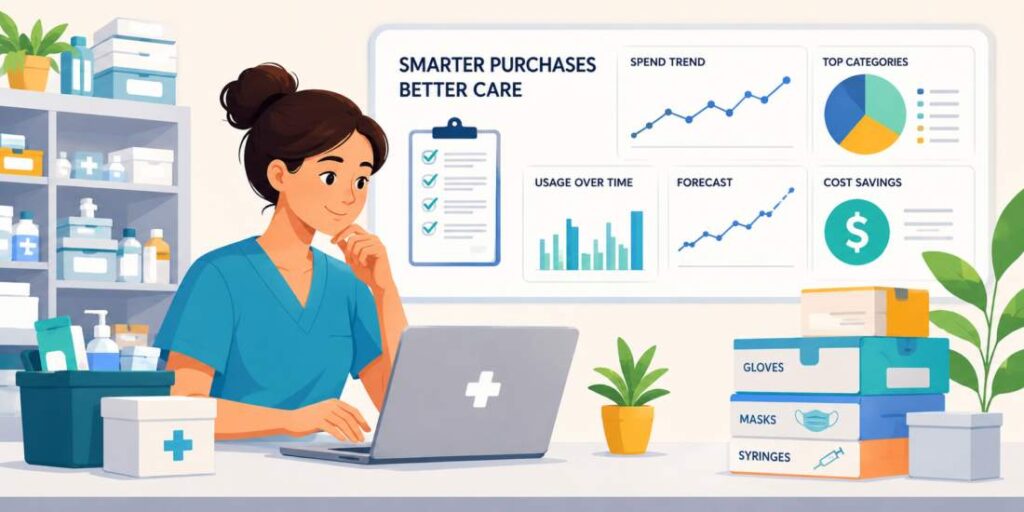
For many small healthcare businesses, purchasing decisions are often driven by habit, memory, urgency, or simple instinct. When a supply appears to be running low, someone places an order. When a vendor offers a promotion, extra stock gets added to the cart. When everyone feels nervous about shortages, purchasing can quickly turn into an enthusiastic exercise in overpreparation.
While experience certainly has value, relying entirely on intuition can create expensive problems. A data-driven approach helps healthcare organizations make smarter decisions, improve budgeting accuracy, and maintain the supplies they need without tying up unnecessary cash in inventory.
Why Guesswork Becomes Expensive
Instinct works well in many situations. Experienced healthcare professionals often develop a strong understanding of their operational needs over time. However, memory has limitations, especially when dozens or hundreds of products must be monitored.Without reliable data, businesses can easily encounter several common challenges:
- Ordering too much inventory that sits unused for months.
- Running out of critical supplies unexpectedly.
- Paying higher prices due to rushed purchases.
- Struggling to understand where supply budgets are actually going.
- Missing opportunities to consolidate purchases and negotiate better pricing.
Healthcare businesses operate in an environment where costs must be carefully controlled. Every unnecessary purchase reduces resources that could otherwise support patient care, staffing, technology improvements, or facility upgrades.
Simple Data Often Delivers Big Insights
Many people hear the phrase “data analysis” and immediately imagine giant spreadsheets, complicated software, and someone speaking passionately about pivot tables for forty-five minutes.In reality, meaningful purchasing analysis often starts with a handful of straightforward metrics.
Small healthcare businesses can benefit significantly from tracking:
- Monthly purchasing volumes.
- Product usage rates.
- Supplier pricing trends.
- Inventory turnover.
- Stock expiration rates.
The goal is not to collect endless amounts of information. The goal is to identify practical insights that support better decisions.
Tracking Trends Instead of Reacting to Surprises
One of the greatest advantages of data-based purchasing is the ability to spot trends before they become problems.Consider a clinic that notices a gradual increase in usage of specific treatment supplies over six consecutive months. Without tracking, this change may go unnoticed until shortages begin occurring.
With historical data available, managers can identify the trend early and adjust purchasing plans accordingly.
Trend analysis also helps reveal seasonal fluctuations. Certain services may experience higher demand during particular times of the year. Supply needs often follow those patterns.
Businesses that understand these cycles can prepare proactively rather than scrambling to place emergency orders. Emergency purchasing rarely comes with discounts. It usually arrives carrying premium shipping fees and a sense of regret.
Historical trends also provide valuable context during budgeting discussions. Instead of estimating future expenses based on vague recollections, decision-makers can reference actual usage patterns and purchasing records.
Forecasting Demand with Greater Confidence
Forecasting does not require predicting the future with mystical accuracy. It simply involves making informed estimates based on available information.Effective forecasting combines several factors:
- Past consumption data.
- Expected patient volumes.
- Seasonal demand patterns.
- Upcoming service changes.
- Supplier lead times.
Perhaps most importantly, forecasting helps transform purchasing from a reactive task into a strategic process.
Finding Cost-Saving Opportunities Hidden in Plain Sight
Many healthcare businesses assume cost reduction means buying cheaper products. Sometimes that may be appropriate, but data often reveals savings opportunities that have little to do with changing product quality.A careful review of purchasing records can uncover duplicate orders, inconsistent pricing, unnecessary rush shipments, and products that rarely get used.
For example, two departments may unknowingly order identical supplies from different vendors at different prices. Individually, the difference may seem minor. Across an entire year, however, those small variations can quietly accumulate into meaningful expenses.
Data can also highlight products that repeatedly expire before being used. Few things are more disappointing than discovering a shelf full of items that effectively transformed themselves into very expensive decorations.
Another common opportunity involves supplier consolidation. When organizations understand exactly what they purchase and from whom, they may be able to negotiate better terms, simplify ordering processes, and reduce administrative workload.
The most effective cost-saving initiatives are often based on visibility rather than sacrifice. When spending becomes easier to understand, improving it becomes far easier as well.
Building a Data-Driven Culture Without Making It Complicated
One reason some organizations avoid data-driven purchasing is the belief that it requires major operational changes.In reality, successful implementation often starts with a few manageable steps.
Begin by identifying the products that account for the largest portion of supply spending. Track usage, purchasing frequency, and inventory levels for those items first.
Establish regular review periods. Monthly reviews are often sufficient for many small healthcare businesses. During these sessions, examine purchasing trends, budget performance, and inventory movement.
It is also important to involve the people who use supplies every day. Frontline staff frequently notice usage changes long before those shifts become visible in reports.
Combining operational experience with objective data creates a stronger decision-making process than either approach alone.
Technology can certainly help, but sophisticated systems are not always necessary. Even simple reporting tools can provide valuable visibility when used consistently.
When Better Data Leads to Better Patient Care
Purchasing decisions are often viewed primarily through a financial lens, but their impact extends much further.Reliable inventory management helps ensure that healthcare professionals have access to the supplies they need when they need them. Shortages can disrupt workflows, increase stress, and affect operational efficiency.
Accurate forecasting and purchasing practices contribute to smoother daily operations. Teams spend less time searching for products, placing emergency orders, or dealing with inventory-related surprises.
Financial stability also creates flexibility. Resources saved through smarter purchasing can support investments in staff development, equipment upgrades, patient services, and other important initiatives.
At its core, effective purchasing is not simply about controlling costs. It is about creating an environment where resources are managed responsibly and operational decisions are supported by reliable information.
Prescription for Smarter Purchasing
Successful healthcare businesses rarely leave patient care entirely to guesswork. The same principle applies to purchasing decisions.Data does not eliminate uncertainty, nor does it replace professional judgment. What it does provide is a clearer picture of reality. It shows what is being used, what is being wasted, what is costing more than expected, and where opportunities for improvement exist.
Organizations that track trends, forecast demand, and regularly review purchasing data place themselves in a stronger position to manage budgets effectively while maintaining operational readiness.
The result is a purchasing process that becomes less reactive, more predictable, and considerably more efficient. And perhaps best of all, the storage cupboard stops behaving like an archaeological dig where every shelf reveals evidence of purchasing decisions from a mysterious era long forgotten.
Article kindly provided by zenone.com